
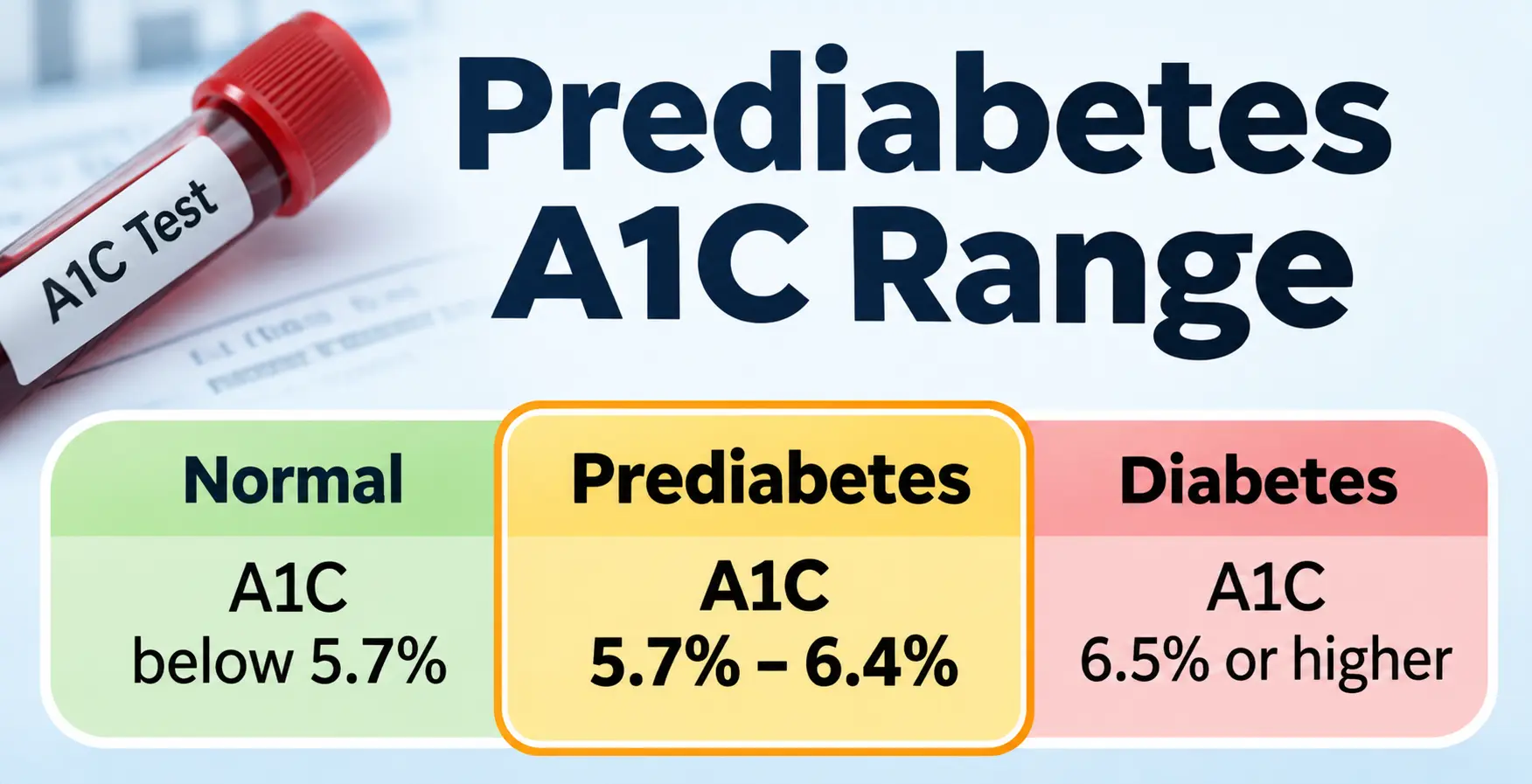
Prediabetes means your blood sugar is higher than normal but not yet high enough to be called type 2 diabetes. It usually causes no symptoms, so most people find out through a routine blood test. The standard prediabetes A1C range is 5.7% to 6.4% (39 to 46 mmol/mol). The encouraging part is that this stage is often reversible. Modest weight loss, regular movement and better eating habits can bring blood sugar back to the normal range and sharply lower the risk of developing type 2 diabetes.
Key takeaways
- Prediabetes is a warning stage, not a diagnosis of diabetes.
- Most people have no symptoms, so testing is the only reliable way to know.
- An A1C of 5.7% to 6.4%, a fasting glucose of 100 to 125 mg/dL (5.6 to 6.9 mmol/L), or a 2-hour glucose tolerance result of 140 to 199 mg/dL (7.8 to 11.0 mmol/L) falls in the prediabetes range under American Diabetes Association criteria.
- In the large Diabetes Prevention Program trial, structured lifestyle change cut the risk of type 2 diabetes by 58% in adults with prediabetes.
- Losing 5% to 7% of body weight and getting about 150 minutes of physical activity a week are the two most proven steps.
What is prediabetes?
After you eat, your body breaks food down into glucose, and the hormone insulin helps move that glucose from your blood into your cells for energy. In prediabetes, your cells respond less well to insulin, a problem called insulin resistance. Your pancreas compensates by making more insulin for a while, but eventually it may not keep up, and blood glucose starts to climb.
At this stage the numbers are elevated but still below the diabetes threshold. Doctors sometimes describe it in two forms: impaired fasting glucose, where morning blood sugar is raised, and impaired glucose tolerance, where blood sugar stays high two hours after a sugary drink. You can have either one or both.
Prediabetes matters because it raises the risk of type 2 diabetes, and it is also linked with a higher risk of heart disease and stroke. Large health agencies estimate that tens of millions of adults in the United States alone have it, and most of them do not know.
Prediabetes symptoms: why you may not notice anything
The honest answer is that prediabetes usually has no clear symptoms. That is exactly why it goes undetected for years.
Some people notice one sign linked to insulin resistance: darkened, velvety patches of skin, most often on the back of the neck, in the armpits or in the groin. This is called acanthosis nigricans. It is not proof of prediabetes, but it is a good reason to ask for a blood test.
Other things people sometimes report, such as tiredness, increased thirst or more frequent urination, are common and nonspecific. They are more typical once blood sugar has risen into the diabetes range. Do not wait for symptoms before getting tested if you have risk factors.
Prediabetes A1C range and blood sugar levels
Three blood tests are used to identify prediabetes. The A1C test shows your average blood sugar over roughly the past three months and does not require fasting. The fasting plasma glucose test needs at least 8 hours without food. The oral glucose tolerance test checks your blood sugar before and two hours after you drink a measured glucose solution.
| Test | Normal | Prediabetes | Diabetes |
|---|---|---|---|
| A1C | Below 5.7% (below 39 mmol/mol) | 5.7% to 6.4% (39 to 46 mmol/mol) | 6.5% or higher (48 mmol/mol or higher) |
| Fasting glucose | Below 100 mg/dL (below 5.6 mmol/L) | 100 to 125 mg/dL (5.6 to 6.9 mmol/L) | 126 mg/dL or higher (7.0 mmol/L or higher) |
| 2-hour glucose tolerance test | Below 140 mg/dL (below 7.8 mmol/L) | 140 to 199 mg/dL (7.8 to 11.0 mmol/L) | 200 mg/dL or higher (11.1 mmol/L or higher) |
Different countries use slightly different cut-offs. The table above follows American Diabetes Association criteria. The World Health Organization sets the fasting threshold for impaired fasting glucose a little higher, at 110 mg/dL (6.1 mmol/L), and some national guidelines, including those in the UK, start the prediabetes A1C range at 6.0% (42 mmol/mol). If your result sits near an edge, ask your doctor which standard they use.
One abnormal result is a signal, not a final verdict. Doctors usually confirm with a repeat test before making a diagnosis.
Who is at risk?
You are more likely to develop prediabetes if you:
- Are overweight or carry extra weight around the waist
- Are 35 or older
- Have a parent or sibling with type 2 diabetes
- Are physically inactive
- Had gestational diabetes or gave birth to a baby over 9 pounds (4 kg)
- Have polycystic ovary syndrome (PCOS)
- Have high blood pressure or abnormal cholesterol
- Are of South Asian, African, Hispanic or Pacific Islander descent, which carries a higher risk at lower body weights
US screening guidance recommends testing adults aged 35 to 70 who are overweight or have obesity, and suggests considering testing at a lower body mass index (BMI of 23 or above) for people of Asian ancestry. If your first test is normal, repeating it about every three years is a reasonable interval. Your doctor may advise testing sooner if you have several risk factors.
Can you reverse prediabetes?
Yes, for many people. Reversing prediabetes means bringing your blood sugar numbers back into the normal range. The best evidence comes from the Diabetes Prevention Program (DPP), a major US trial. In it, adults with prediabetes who followed an intensive lifestyle programme, aiming for about 7% weight loss and regular physical activity, reduced their chance of developing type 2 diabetes by 58%. The effect was even larger in people over 60. The medicine metformin reduced the risk by 31% over the same period, so lifestyle change outperformed medication in that trial.
It is worth being realistic. Reversal is not a one-time cure. If weight and old habits return, blood sugar often drifts back up, so think of it as a lasting change in how you live rather than a short diet.
How to reverse prediabetes: 7 steps that work
1. Aim for 5% to 7% weight loss
You do not need to reach an ideal weight. For a person weighing 90 kg (200 lb), losing 4.5 to 6.5 kg (10 to 14 lb) is enough to produce a meaningful drop in diabetes risk. Slow, steady loss of 0.5 kg (1 lb) a week is more sustainable than crash dieting.
2. Move for at least 150 minutes a week
Brisk walking, cycling, swimming or dancing for 30 minutes on five days a week meets the target. Muscles use glucose during activity and stay more sensitive to insulin for hours afterward. Adding two sessions of strength training a week helps even more. A 10-minute walk after meals is a simple way to blunt blood sugar spikes.
3. Build meals around fibre, protein and whole foods
There is no single prediabetes diet, but the patterns that work share common features:
- Fill half your plate with non-starchy vegetables such as leafy greens, broccoli, tomatoes, peppers and cauliflower.
- Choose whole grains and legumes like oats, brown rice, barley, lentils, chickpeas and beans over white rice, white bread and pastries.
- Include lean protein such as fish, eggs, poultry, tofu or Greek yogurt at each meal.
- Use healthy fats from nuts, seeds, olive oil and avocado.
- Watch portion size of starchy foods, since even healthy carbohydrates raise blood sugar.
4. Cut back on sugary drinks and ultra-processed foods
Soft drinks, sweetened tea and coffee, fruit juice, packaged snacks and sweets deliver glucose fast with little fibre to slow it down. Swapping sugary drinks for water, unsweetened tea or sparkling water is one of the easiest high-impact changes.
5. Prioritise sleep and manage stress
Poor sleep and chronic stress both make cells more resistant to insulin. Most adults need 7 to 9 hours of sleep. Regular routines, less late-night screen time and stress-relief habits such as walking, breathing exercises or time with friends all help.
6. Stop smoking and limit alcohol
Smoking increases insulin resistance and the risk of type 2 diabetes. Heavy drinking adds extra calories and can destabilise blood sugar. If you drink, keep it moderate.
7. Join a structured programme and recheck your numbers
People do better with support. In the United States, the CDC-recognised National Diabetes Prevention Program offers a year-long, coach-led group course in person and online. Many other countries run similar prevention programmes through their health services. Ask your doctor about local options, and repeat your A1C or fasting glucose test every 6 to 12 months, or as advised, to track progress.
Does prediabetes need medication?
For most people, lifestyle change is the first-line treatment. Doctors sometimes consider metformin for higher-risk adults, for example those with a BMI of 35 or above, those under 60 or women with a history of gestational diabetes. This is an individual decision made with your doctor. Never start or stop a medicine on your own.
A simple one-day eating example
- Breakfast: Vegetable omelette with a slice of whole-grain toast, or oats with nuts and berries
- Lunch: Grilled chicken or chickpea salad with olive oil, plus a small portion of brown rice or quinoa
- Snack: A handful of almonds and an apple, or plain yogurt
- Dinner: Baked fish or lentil curry with a large serving of sautéed vegetables
- Drinks: Water, unsweetened tea or black coffee
Adjust foods to your culture, budget and preferences. The pattern matters more than any single ingredient.
When to see a doctor
Book a blood test if you have any of the risk factors above, even without symptoms. See a doctor promptly if you notice extreme thirst, frequent urination, blurred vision, unexplained weight loss, slow-healing cuts or constant fatigue, since these can point to diabetes that has already developed. If you have already been told you have prediabetes, ask for a follow-up plan and a date for your next test.
Final thoughts
Prediabetes is one of the few health warnings that comes with a clear way to act on it. A single blood test can tell you where you stand, and steady changes in how you eat, move and sleep can move your numbers back toward normal. If you have risk factors, talk to your doctor about getting tested this month.
Disclaimar:
This article is for general information and is not a substitute for professional medical advice, diagnosis or treatment. Talk to a qualified healthcare provider about your own test results and treatment options.