
Can You Have Pregnancy Symptoms Before a Missed Period?
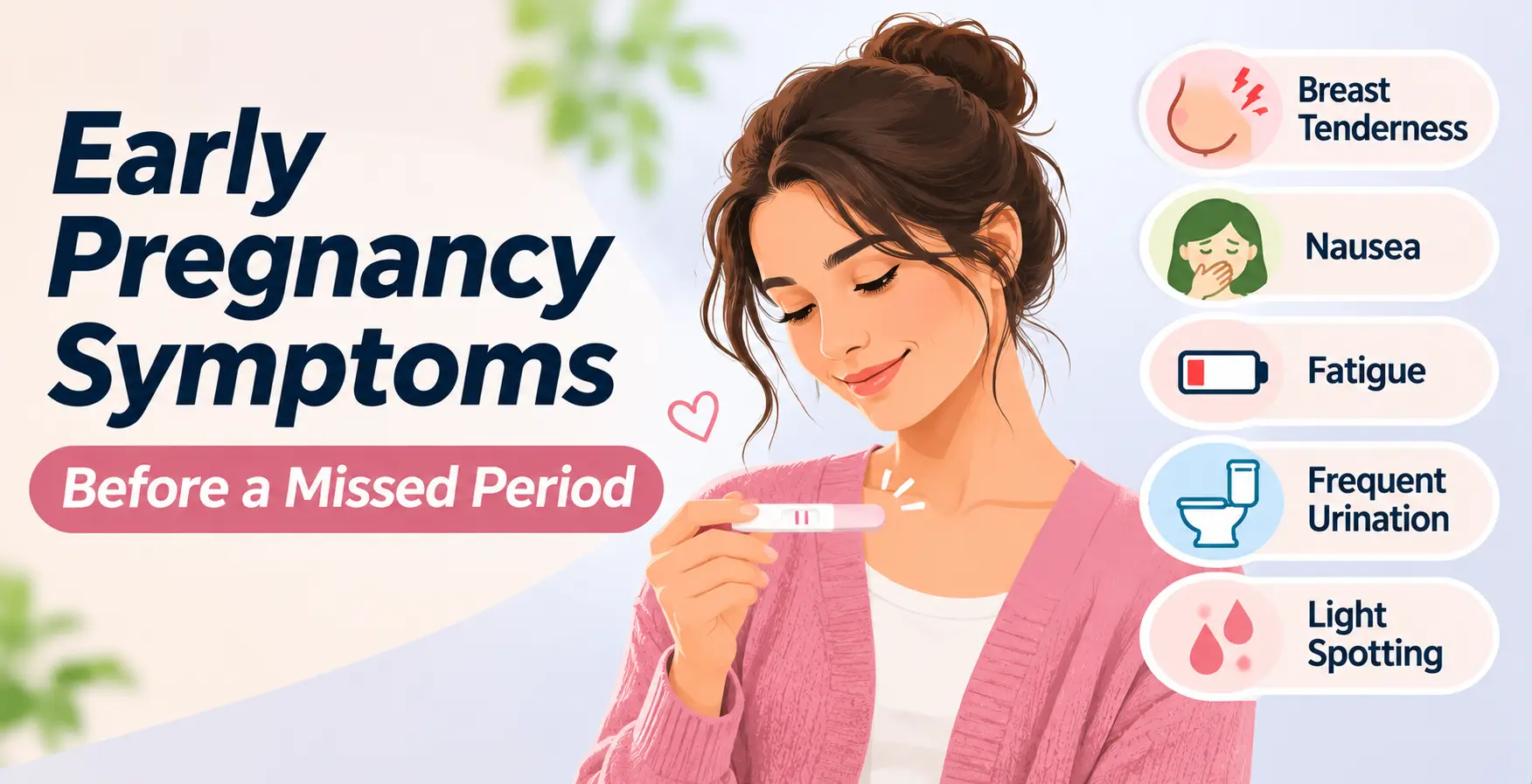
Yes, some women notice early pregnancy symptoms such as light spotting, breast tenderness, fatigue, mild cramping, nausea and frequent urination about 1 to 2 weeks after conception, which can be before a period is due. However, many women have no symptoms at all this early, and almost all of these signs can also be caused by an approaching period, stress or illness. A pregnancy test is the only reliable way to know.
How Soon Do Pregnancy Symptoms Start?
Here is a rough timeline, counted from ovulation or conception:
| Time after conception | What is happening | Possible symptoms |
|---|---|---|
| Day 0 | Egg is fertilised | None |
| Days 6 to 12 | Embryo implants in the uterus lining | Light spotting, mild cramps (in some women) |
| Days 10 to 14 | hCG hormone rises and becomes detectable | Breast changes, fatigue, bloating |
| Around day 14 | Period is due | Missed period, positive test |
| Weeks 4 to 6 | hCG, progesterone and oestrogen keep rising | Nausea, frequent urination, food aversions |
Symptoms vary a great deal from person to person and from one pregnancy to another.
10 Early Pregnancy Symptoms Before a Missed Period
1. Implantation bleeding or spotting
Light pink or brown spotting that lasts from a few hours to 1 or 2 days may occur when the embryo attaches to the uterine wall, roughly 6 to 12 days after ovulation. It is much lighter than a normal period and is seen in only a minority of pregnancies.
2. Mild cramping
Some women feel light period-like pulling or twinges in the lower abdomen at implantation. Cramps that are mild and short-lived are common. Severe or one-sided pain needs urgent medical attention.
3. Breast tenderness and changes
Rising hormones can make breasts feel sore, heavy, tingly or fuller, and the areolas may darken. This can resemble pre-period symptoms, but in pregnancy it tends to persist and may feel stronger.
4. Unusual tiredness
Progesterone rises sharply in early pregnancy and can cause deep fatigue and sleepiness, even before a missed period.
5. Nausea, with or without vomiting
Often called morning sickness, it can strike at any time of day. It commonly begins around week 4 to 6 of pregnancy, but a few women feel queasy earlier.
6. Frequent urination
Increased blood volume and hormonal changes make the kidneys work harder and can send you to the toilet more often.
7. Bloating and constipation
Progesterone slows digestion, which can lead to gas, a bloated stomach and constipation.
8. Food cravings, aversions and a heightened sense of smell
Sudden dislike of foods you usually enjoy, a metallic taste in the mouth, or strong reactions to smells can appear early.
9. Mood swings and headaches
Hormone shifts can cause irritability, weepiness, anxiety and mild headaches.
10. Raised basal body temperature
If you track your temperature, it stays elevated for more than about 18 days after ovulation when you are pregnant.
Why These Signs Can Be Misleading
Many of these symptoms overlap with premenstrual syndrome (PMS), which is caused by the same hormone progesterone. Stress, travel, illness, changes in diet or sleep, a new medicine and hormonal contraception changes can cause fatigue, cramps, breast tenderness or spotting too.
Pregnancy vs PMS: if symptoms feel stronger than usual, are new for you, or are followed by no period, take a test.
Implantation Bleeding vs Period
| Feature | Implantation bleeding | Period |
|---|---|---|
| Timing | About 6 to 12 days after ovulation | At the end of your usual cycle |
| Colour | Light pink or brown | Bright to dark red |
| Flow | Spotting only | Gradually heavier, with clots |
| Duration | Hours to 2 days | 3 to 7 days |
| Cramping | Mild or none | Often more noticeable |
When Can You Take a Pregnancy Test?
Urine pregnancy tests detect the hormone hCG. For the most accurate result:
- Wait until the first day of your missed period, or about 14 days after ovulation
- Use first-morning urine, which is more concentrated
- Follow the instructions on the kit carefully
Some sensitive tests claim to work a few days before a missed period, but testing too early can give a false negative because hCG may not yet be high enough. If you get a negative result and still have no period, repeat the test after 3 to 7 days, or ask your doctor for a blood test (beta hCG), which can detect pregnancy earlier and more accurately.
What to Do If You Think You Are Pregnant
- Take a home pregnancy test at the right time.
- If it is positive, book an appointment with a doctor or gynaecologist to confirm and start antenatal care.
- Start folic acid (commonly 400 micrograms daily, as advised by your doctor), ideally before conception.
- Avoid alcohol, smoking and recreational drugs.
- Do not stop or start any prescription medicine without medical advice, and check that your current medicines are safe in pregnancy.
- Eat a balanced diet, stay hydrated and rest well.
When to Seek Medical Help Urgently
Contact a doctor or go to the emergency room if you have:
- Severe or one-sided abdominal or pelvic pain
- Heavy vaginal bleeding (soaking a pad every hour) or passing clots
- Dizziness, fainting or pain in the shoulder tip, which can be signs of an ectopic pregnancy
- Persistent vomiting where you cannot keep fluids down
- Fever with pain or abnormal discharge
Spotting with a positive test also deserves a prompt call to your doctor.
Common Myths About Early Pregnancy Signs
- “You always feel different immediately.” Many women feel nothing until week 4 to 6.
- “Spotting means you are not pregnant.” Light bleeding can occur in early pregnancy, though it can also signal problems, so tell your doctor.
- “A negative test means you are not pregnant.” A very early test can miss pregnancy.
- “Morning sickness only happens in the morning.” It can occur any time of day.
- “Strong symptoms mean a boy or a girl.” Symptoms do not predict a baby’s sex.
Frequently Asked Questions
What are the very first signs of pregnancy?
Light spotting, mild cramping, breast tenderness, tiredness and bloating are among the earliest signs, followed by nausea and frequent urination as hCG rises.
Can I feel pregnant 1 week after conception?
You may feel subtle changes such as tiredness or mild cramps, but most women have no noticeable symptoms this early.
How can I tell the difference between PMS and early pregnancy?
The symptoms overlap closely. A missed period, persistent nausea, stronger breast changes or a positive test point toward pregnancy.
Does implantation bleeding always happen?
No. Only a minority of women, roughly 1 in 4, notice spotting in early pregnancy.
Can I be pregnant with no symptoms?
Yes. Some women have almost no symptoms until several weeks into pregnancy, and that is normal.
How early can a blood test detect pregnancy?
A blood hCG test can often detect pregnancy about 7 to 10 days after ovulation, earlier than most urine tests.
Can stress delay my period and mimic pregnancy?
Yes. Stress, weight changes, illness and hormonal conditions can delay periods and cause symptoms similar to early pregnancy.
Is cramping before a missed period normal in pregnancy?
Mild cramping can be normal, but severe, one-sided or worsening pain should be checked by a doctor straight away.
Final Thoughts
Symptoms before a missed period can be early hints of pregnancy, but they are not proof. If you are sexually active and notice changes such as spotting, tender breasts, fatigue or nausea, wait until the right time and take a test. Seek medical care if you test positive or if you ever have severe pain or heavy bleeding.
Medical note: This article is educational and does not replace advice from a qualified doctor