
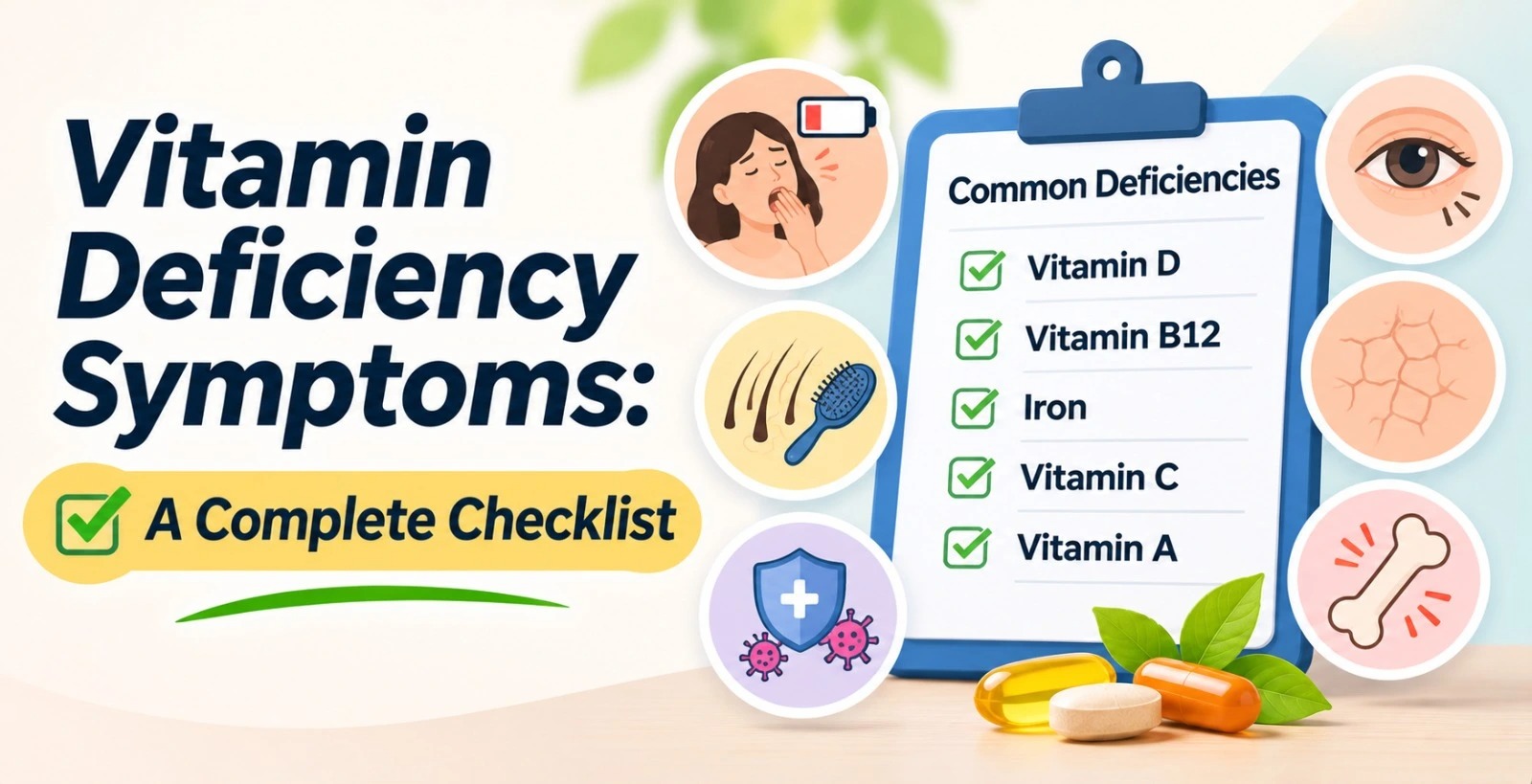
Feeling tired, achy or just “off” for weeks? Hair falling out more than usual? Cracks at the corners of your mouth that won’t heal? Any of these can be your body’s way of saying it is short on something it needs.
Vitamins are tiny nutrients with huge jobs. They help your body make energy, build blood cells, protect your eyes, strengthen bones and keep your immune system working. When you don’t get enough of one, the signs can be subtle at first and easy to blame on stress or a busy schedule.
This guide walks you through the most common vitamin deficiency symptoms in a simple checklist format, so you can spot patterns and know when it’s time to get tested.
What Is a Vitamin Deficiency?
A vitamin deficiency happens when your body doesn’t get, or can’t absorb, enough of a particular vitamin over time. It can develop for several reasons:
- Diet: Restrictive eating, skipping whole food groups, or relying on processed food.
- Absorption problems: Conditions such as celiac disease, Crohn’s disease, or surgery on the stomach or intestines.
- Medications: Some drugs, including long-term acid reducers and metformin, can lower levels of certain vitamins such as B12.
- Life stages: Pregnancy, breastfeeding, older age and rapid growth in childhood all raise nutrient needs.
- Lifestyle: Heavy alcohol use, smoking, and very little sun exposure.
- Health conditions: Kidney, liver and digestive diseases can all affect vitamin status.
General Warning Signs of a Vitamin Deficiency
Some symptoms are shared by many deficiencies. If you tick several of these, it’s worth looking closer:
- Constant tiredness or low energy
- Weakness or muscle cramps
- Pale or dull-looking skin
- Hair thinning or hair loss
- Brittle nails
- Mouth ulcers or cracks at the corners of the lips
- Frequent colds and slow recovery from illness
- Mood changes, irritability or low mood
- Poor concentration or “brain fog”
- Tingling, numbness or pins and needles
- Slow wound healing or easy bruising
Now let’s break it down vitamin by vitamin.
Vitamin A Deficiency Checklist
Vitamin A supports vision, skin and immune health.
Symptoms to look for:
- Difficulty seeing in dim light (night blindness)
- Dry, irritated eyes
- Dry, rough or flaky skin
- Frequent infections, especially in the chest or throat
- Slow wound healing
Food sources: Carrots, sweet potatoes, spinach, kale, pumpkin, mango, eggs, dairy and liver.
Good to know: Deficiency is rare in people who eat a varied diet but remains a major problem in parts of the world with limited food variety. Too much preformed vitamin A from supplements can also be harmful, so avoid over-supplementing.
Vitamin B1 (Thiamine) Deficiency Checklist
Thiamine helps turn food into energy and keeps nerves healthy.
Symptoms to look for:
- Fatigue and weakness
- Irritability or poor memory
- Tingling or burning in the hands and feet
- Loss of appetite
- Muscle weakness or wasting
Food sources: Whole grains, legumes, nuts, seeds, pork and fortified cereals.
Higher risk: People who drink heavily, have had weight-loss surgery, or rely mostly on polished white rice or refined grains.
Vitamin B2 (Riboflavin) Deficiency Checklist
Symptoms to look for:
- Cracks or sores at the corners of the mouth
- Swollen, red lips
- Sore throat
- Swollen, magenta-colored tongue
- Scaly, greasy skin patches
- Sensitivity to light and itchy, watery eyes
Food sources: Milk, yogurt, eggs, lean meats, mushrooms, almonds and fortified cereals.
Vitamin B3 (Niacin) Deficiency Checklist
Severe niacin deficiency causes a condition called pellagra.
Symptoms to look for:
- Skin rash or darkening on areas exposed to sun
- Bright red, sore tongue
- Diarrhea and poor appetite
- Fatigue, headaches and low mood
- In severe cases, confusion and memory problems
Food sources: Chicken, fish, peanuts, mushrooms, whole grains and fortified foods.
Vitamin B6 Deficiency Checklist
Symptoms to look for:
- Anemia-type tiredness
- Itchy, scaly rash on the face or scalp
- Cracked lips and sore tongue
- Low mood, irritability or confusion
- Tingling in hands and feet
- Weakened immunity
Food sources: Chickpeas, bananas, potatoes, fish, poultry and fortified cereals.
Vitamin B7 (Biotin) Deficiency Checklist
True biotin deficiency is uncommon, but it does happen.
Symptoms to look for:
- Thinning hair
- Red, scaly rash around the eyes, nose and mouth
- Brittle nails
- Fatigue
- Tingling in the hands and feet
Food sources: Eggs (cooked), nuts, seeds, salmon, sweet potatoes and legumes.
Good to know: Raw egg whites contain a protein that blocks biotin absorption, so eat eggs cooked. Also, biotin supplements can interfere with some lab tests, so tell your doctor if you take them.
Vitamin B9 (Folate) Deficiency Checklist
Folate is essential for making red blood cells and DNA. It is especially important before and during pregnancy.
Symptoms to look for:
- Fatigue and weakness
- Shortness of breath
- Pale skin
- Mouth sores and a swollen, smooth tongue
- Irritability and trouble concentrating
- Headaches and heart palpitations
Food sources: Leafy greens, lentils, beans, asparagus, citrus fruits and fortified grains.
Pregnancy note: Low folate early in pregnancy is linked to neural tube defects in babies. If you are planning to conceive, speak to your doctor about folic acid.
Vitamin B12 Deficiency Checklist
B12 deficiency is one of the most common, and one of the easiest to miss, because it can develop slowly.
Symptoms to look for:
- Extreme tiredness and weakness
- Pale or slightly yellow skin
- Tingling, numbness or “pins and needles” in hands and feet
- Trouble with balance or walking
- Memory problems, confusion or low mood
- Sore, red tongue and mouth ulcers
- Shortness of breath and dizziness
Food sources: Meat, fish, eggs, dairy and fortified foods or nutritional yeast.
Higher risk: Vegans and vegetarians, adults over 50, people with digestive conditions, and those taking metformin or long-term acid-reducing medication. Untreated B12 deficiency can cause lasting nerve damage, so don’t ignore neurological symptoms.
Vitamin C Deficiency Checklist
Severe, long-term deficiency causes scurvy.
Symptoms to look for:
- Swollen, bleeding or sore gums
- Easy bruising
- Slow wound healing
- Dry, rough skin and tiny red spots on the skin
- Corkscrew-shaped body hairs
- Joint pain and swelling
- Fatigue and low mood
Food sources: Oranges, amla (Indian gooseberry), guava, lemon, kiwi, strawberries, bell peppers, broccoli and tomatoes.
Higher risk: Smokers, people with very limited diets, and those with alcohol dependence.
Vitamin D Deficiency Checklist
Vitamin D deficiency is extremely common worldwide, including in sunny countries, because of indoor lifestyles, clothing, air pollution and darker skin tones, which make less vitamin D from sunlight.
Symptoms to look for:
- Ongoing fatigue
- Bone pain or lower back pain
- Muscle aches, weakness or cramps
- Getting sick often
- Low mood
- Slow healing of wounds
- Hair loss
- In children, delayed growth or soft bones (rickets)
Food sources: Fatty fish, egg yolks, fortified milk and cereals, and some mushrooms. Sensible sun exposure helps too.
Good to know: Many people with low vitamin D have no obvious symptoms at all, so a blood test is the only reliable way to know.
Vitamin E Deficiency Checklist
Deficiency is rare in healthy people and usually linked to fat-absorption problems.
Symptoms to look for:
- Muscle weakness
- Poor coordination and balance
- Numbness or tingling in the limbs
- Vision problems
- Weakened immune response
Food sources: Sunflower seeds, almonds, hazelnuts, vegetable oils, spinach and avocado.
Vitamin K Deficiency Checklist
Vitamin K helps your blood clot properly and supports bone health.
Symptoms to look for:
- Easy bruising
- Frequent nosebleeds
- Bleeding gums
- Heavy menstrual bleeding
- Blood in urine or stool
- Wounds that bleed for a long time
Food sources: Spinach, kale, broccoli, cabbage, soybeans and some fermented foods.
Important: If you take blood thinners such as warfarin, talk to your doctor before changing how much vitamin K you eat.
Bonus: Iron and Magnesium (Not Vitamins, But Often Confused)
Two minerals commonly cause symptoms that people assume are vitamin problems:
- Iron deficiency: Fatigue, pale skin, cold hands and feet, breathlessness, brittle nails, hair loss, restless legs and cravings for ice or non-food items.
- Magnesium deficiency: Muscle twitches and cramps, fatigue, irregular heartbeat, numbness and poor sleep.
If you’re tired all the time, ask your doctor to check these along with your vitamin levels.
Quick Symptom Finder
| If you notice… | Possible vitamin or nutrient to check |
|---|---|
| Cracks at the corners of the mouth | B2, B3, B6, iron |
| Bleeding gums or easy bruising | Vitamin C, Vitamin K |
| Tingling hands and feet | B12, B1, B6, B9, Vitamin E |
| Night vision trouble | Vitamin A |
| Bone pain and muscle weakness | Vitamin D |
| Hair thinning and brittle nails | Biotin, iron, B-vitamins, Vitamin D |
| Mouth ulcers and sore tongue | B12, B9, B2, iron |
| Constant fatigue | B12, B9, Vitamin D, iron |
| Frequent infections | Vitamin A, C, D |
This table is a starting point for a conversation with your doctor, not a diagnosis.
Who Is Most at Risk?
You may be more likely to develop a deficiency if you:
- Follow a vegan or vegetarian diet
- Are pregnant or breastfeeding
- Are over 60
- Have a digestive disorder or have had gastric surgery
- Drink alcohol heavily or smoke
- Take certain long-term medications
- Spend most of your time indoors
- Eat a limited or highly processed diet
- Have a chronic kidney or liver condition
How Are Vitamin Deficiencies Diagnosed?
A doctor will usually start with your symptoms, diet and medical history, then may order:
- A complete blood count (CBC)
- Specific tests such as vitamin B12, folate, vitamin D (25-hydroxyvitamin D) and iron studies
- Additional tests to look for an underlying cause, such as an absorption problem
Guessing from symptoms alone isn’t reliable. Testing tells you what you actually need, and what you don’t.
How to Prevent and Correct Deficiencies
- Eat the rainbow. A varied diet with vegetables, fruits, whole grains, legumes, nuts, seeds, dairy or fortified alternatives, and protein sources covers most needs.
- Don’t overcook vegetables. Heat and long boiling can destroy some water-soluble vitamins like vitamin C and folate. Steaming or quick sautéing helps preserve them.
- Pair nutrients smartly. Vitamin C helps your body absorb plant-based iron, and healthy fats help you absorb vitamins A, D, E and K.
- Get safe sun exposure. A little regular daylight helps your body make vitamin D, but protect your skin from sunburn.
- Supplement only when needed. Supplements are useful when a deficiency is confirmed or when your diet can’t meet your needs (for example, B12 for vegans). More is not always better, and some vitamins can be harmful in excess.
- Treat the root cause. If a medical condition or medication is behind the deficiency, address that too.
When to See a Doctor
Book an appointment if you have:
- Fatigue or weakness lasting more than a couple of weeks
- Numbness, tingling or balance problems
- Unexplained bruising or bleeding
- Vision changes, especially at night
- Memory problems or ongoing low mood
- Symptoms alongside a restricted diet, pregnancy, or a digestive condition
Seek urgent medical help for sudden confusion, severe weakness, difficulty walking, chest pain, serious bleeding or shortness of breath.
Frequently Asked Questions
Can you have a vitamin deficiency and not know it? Yes. Many deficiencies develop slowly, and early symptoms such as tiredness are easy to overlook.
Which vitamin deficiency is the most common? Vitamin D, vitamin B12 and iron (a mineral) are among the most common worldwide.
How long does it take to correct a deficiency? It depends on the nutrient and how low your levels are. Some people feel better within weeks, while nerve-related symptoms may take months to improve. Your doctor will recheck your levels.
Can I just take a multivitamin? A multivitamin may help fill small gaps, but it often won’t contain enough of a nutrient to treat a true deficiency. Get tested and follow your doctor’s advice.
Can too many vitamins be harmful? Yes. Fat-soluble vitamins (A, D, E and K) can build up in the body, and high doses of some others, such as B6, can cause problems. Stick to recommended amounts unless your doctor says otherwise.
Final Thoughts
Your body is good at sending signals. Persistent tiredness, tingling, skin changes, frequent infections or mouth problems are worth paying attention to. Use this checklist to notice patterns, then confirm what’s going on with a simple blood test and your doctor’s guidance.
In most cases, vitamin deficiencies are very treatable. Small changes in your diet, along with targeted supplements when necessary, can help you feel like yourself again.
Disclaimer: The information in this article is for educational purposes only and does not replace professional medical advice, diagnosis or treatment. Always consult a qualified healthcare provider with questions about your health.